Videos illustrate importance of lichens to deer in the Cowichan Valley
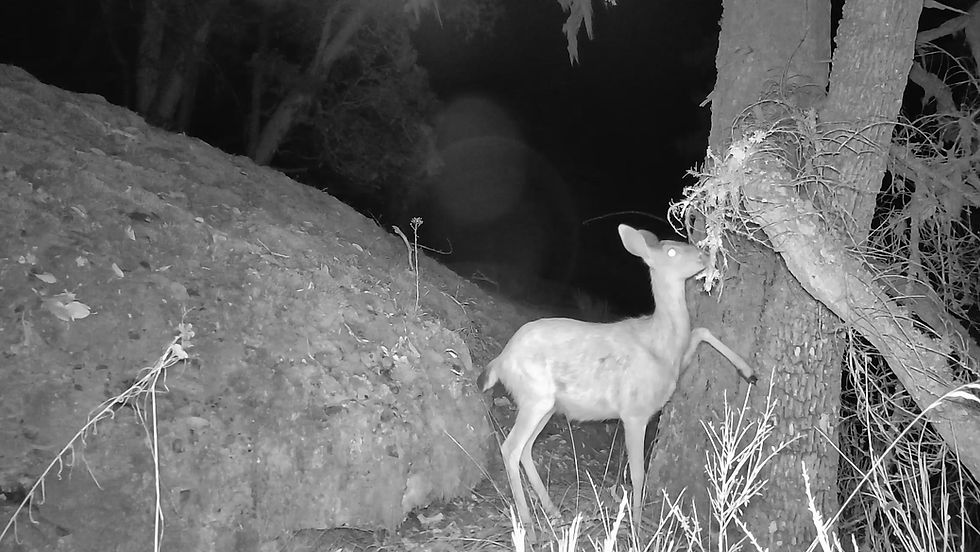


(Note: a spider’s web attached itself to the camera lens.)
Videos illustrate importance of lichens to deer in the Cowichan Valley
Three weeks ago sixmountains.ca published a video of a female black bear, accompanied by a cub, standing on its hind legs to access arbutus berries.
This time, check out two videos of black-tailed deer in the Cowichan Valley foraging for lichens.
Deer are known to eat various types of lichens, including old man’s beard (a member of the genus Usnea) as well as lungwort, rock tripe, and reindeer moss lichen.
Lichens are an especially important food for deer and other ungulates over winter.
According to the iconic guide book, Plants of Coastal British Columbia, by Andy MacKinnon and Jim Pojar: “Instead of invading or scavenging for a living like other fungi — moulds, mildews, mushrooms — lichen fungi cultivate algae within themselves.
“Algae are photosynthesizers, and so can supply the fungus with carbohydrates, vitamins and proteins.
“In return the fungus appears to provide the alga with protection from the elements.”
The Wareham Land Trust in Massachusetts writes: “Lichen are two (or more) organisms existing in a symbiotic, or mutually beneficial, relationship. Usnea consists of an alga which provides food through photosynthesis and a fungus which prevents the lichen from drying out through its network of protective filaments. As a result, lichens can often survive extended dry conditions.
“Old man’s beard can be seen at the bare tops of trees and on bare branches, but it is not harming or killing the tree!
“After something else has damaged the tree (such as harsh weather conditions or gypsy moths), the lichen settles on the dead or dying branches. The absence of leaves allows for greater photosynthesis for the algae. The lichen flourishes where there is no leafy canopy blocking the sun.”
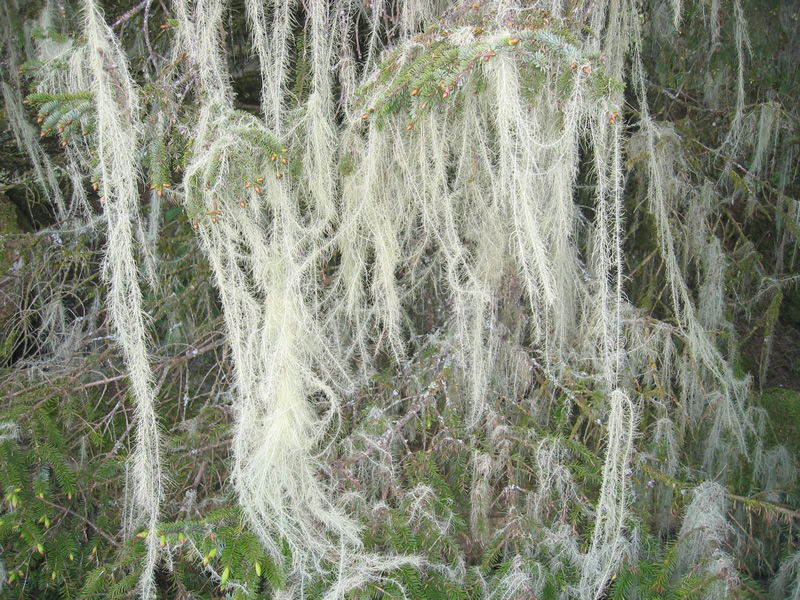
(US Forest Service photo of old man’s beard.)
The Friends of Cortes Island Society adds: “Humans also like to utilize this lichen; we use it for its medicinal purposes such as dressing wounds or aiding in a sore throat or cough.”
Subscribe free to sixmountains.ca. More than 87,000 unique visitors.
— Larry Pynn, Sept. 26, 2025.